


Lighting is no longer just a functional necessity designed to pull us out of the dark. With the evolution of smart home technology, it has become one of the most powerful interior design tools at your disposal. The right illumination can completely alter the perception of a room, making small spaces feel expansive, cold environments feel inviting, and ordinary architecture look spectacular.
Achieving a high-end home aesthetic does not require an expensive remodel. Instead, it requires a strategic approach to layers, placement, and automation. By mastering the art of smart lighting placement, you can transform your living space into a dynamic, visually stunning environment that adapts to your lifestyle.
Understanding the Three Core Layers of Lighting
Before diving into smart placements, you must understand the fundamental rule of interior lighting design: layering. Relying on a single overhead light source flattens a room and creates harsh shadows. To elevate your aesthetic, you must weave together three distinct layers.
1. Ambient Lighting
This is the foundational layer of light that provides general illumination to a room. In a smart home setup, ambient lighting is typically achieved through recessed ceiling lights, smart flush mounts, or large architectural fixtures. The goal of smart ambient lighting is to establish a baseline brightness that can be dimmed or color-adjusted based on the time of day.
2. Task Lighting
Task lighting is directional and focused, designed to help you perform specific activities such as cooking, reading, or working. Smart task lighting offers the added benefit of adjustable color temperatures. For example, you can program a desk lamp to emit a crisp, cool white light during working hours to increase focus, and automatically shift to a warm glow in the evening.
3. Accent Lighting
Accent lighting is where the magic happens for home aesthetics. This layer draws attention to architectural features, artwork, plants, or shelving units. By utilizing smart accent lights, you can create focal points and add dramatic depth to an otherwise flat wall.
Strategic Smart Lighting Placement Room by Room
Every room in your house serves a different purpose, meaning your smart lighting strategy must adapt as you move from space to space.
The Living Room: Creating Drama and Comfort
The living room is a multi-functional space used for entertaining, relaxing, and watching movies.
-
Behind the Television: Place a smart light strip along the back of your TV console or mounted screen. This creates bias lighting, which reduces eye strain during late-night viewing and makes the screen appear crisper while casting a beautiful, soft glow against the wall.
-
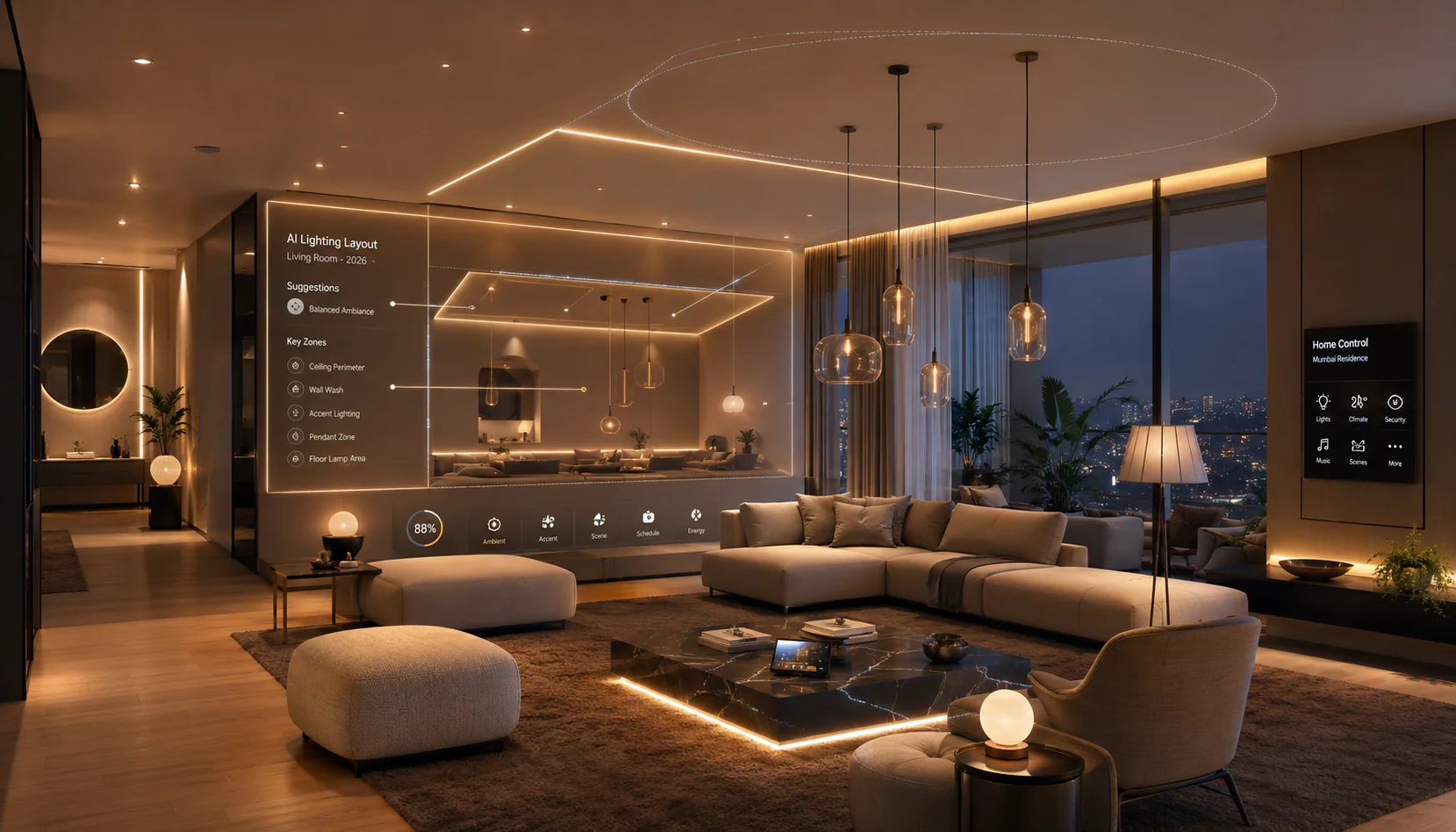
Underneath Furniture: Mount smart light strips beneath your sofa or media cabinet. When programmed to a low, warm setting, this creates a floating effect that adds an immediate luxury hotel vibe to the room.
-
Corners and Alcoves: Position a smart floor lamp in a dark corner, facing the wall. Bouncing the light off the vertical surface softens the illumination and visually expands the boundaries of the room.
The Kitchen: Balancing Utility and Elegance
Kitchens require bright, clear light for food preparation, but they also serve as social hubs during dinner parties.
-
Under-Cabinet Placement: Install smart light strips directly underneath your upper cabinets to illuminate the countertops. This provides excellent task lighting for chopping and measuring, but can be dimmed down to a golden hue later in the evening for a sophisticated ambiance.
-
Toe-Kick Lighting: Place light strips along the bottom kick-plate of your kitchen island or base cabinets. This serves as an excellent low-profile nightlight and highlights the premium flooring material.
-
Inside Glass Cabinets: If you have glass-front cabinetry displaying fine dinnerware, install small smart puck lights inside. Controlling these independently allows you to showcase your curated items like a gallery.
The Bedroom: Designing a Personal Sanctuary
Bedroom lighting should focus on relaxation, circadian rhythm support, and clutter-free design.
-
Behind the Headboard: A smart light strip concealed behind the headboard washes the back wall in a soft gradient of light. This eliminates the need for harsh overhead lighting when winding down for sleep.
-
Under the Bed Frame: Integrating motion-activated smart strips under the bed frame creates a gentle pathway guide. If you get up in the middle of the night, the lights trigger at a minimal brightness level so you do not disrupt your sleep cycle or wake your partner.
-
Flanking the Bed: Replace traditional bedside lamps with smart pendant lights hanging from the ceiling or wall-mounted sconces. This frees up nightstand space and allows you to direct light precisely where you read.
Advanced Smart Lighting Techniques for Maximum Aesthetic Impact
Once your physical fixtures are in place, you can leverage the unique capabilities of smart technology to fully optimize your home interior.
The Power of Wall Washing vs. Wall Grazing
Wall washing involves placing light fixtures a short distance away from a wall so the light spreads evenly across the entire surface, hiding imperfections and making the room feel wider. Wall grazing, on the other hand, involves placing the light source directly adjacent to a textured wall, such as brick, stone, or shiplap. This highlights the shadows and textures, creating a striking architectural statement.
Automating the Circadian Rhythm
One of the greatest aesthetic and wellness benefits of smart lighting is the ability to mimic natural sunlight. You can program your entire home system to transition automatically throughout the day:
-
Morning: Crisp, cool blue-white light to simulate sunrise and boost morning energy.
-
Mid-day: Bright, neutral white light for optimal productivity and clarity.
-
Evening: Warm, golden amber tones that signal the body to produce melatonin and prepare for rest.
Zoning and Custom Scenes
Instead of controlling individual light bulbs, group your lights into zones within your smart home app. Create custom scenes tailored to specific moods. A Dinner Party scene might dim the overhead lights by seventy percent while boosting the under-cabinet and accent lights to a warm candle-like glow. A Movie Night scene could turn off all ambient lights while leaving only a faint blue bias light active behind the television.
Frequently Asked Questions
How do I hide visible wires and light strips to maintain a clean aesthetic?
To achieve a professional look, never leave raw light strips exposed to the naked eye. Always mount them inside aluminum channels with diffused covers. This diffuses the individual LED dots into a smooth, continuous beam of light. For wires, use paintable cord concealers along baseboards or route cables through the wall where permitted by local building codes.
What is the ideal color rendering index for home aesthetic lighting?
When purchasing smart bulbs, look for a Color Rendering Index rating of ninety or higher. A high rating ensures that the colors of your furniture, paint, and rugs appear vibrant and true to life under artificial light, preventing your home from looking washed out or clinical.
Will smart lighting work well in rooms that receive a lot of natural daylight?
Smart lighting is highly beneficial in sunlit rooms. By pairing your smart bulbs with ambient light sensors, the system can automatically dim itself down when natural sunlight is abundant, saving energy. As the sun sets, the smart lights will gradually brighten to seamlessly maintain a consistent level of illumination.
How do I prevent smart light strips from unsticking over time?
The adhesive backing on many light strips can fail due to temperature changes or dust. To ensure a permanent bond, thoroughly clean the mounting surface with rubbing alcohol before installation. For extra security, use mounting clips or install the strips inside dedicated aluminum tracks screwed into the surface.
Can smart lighting improve the appearance of low ceilings?
You can visually elevate a low ceiling by utilizing uplighting techniques. Placing smart fixtures, torchier floor lamps, or LED strips on top of tall wardrobes, bookshelves, or crown molding directs light upward. This draws the eye vertically and creates the illusion of a taller, more spacious room.
How many smart scenes should I realistically program for a single room?
To keep your smart home user-friendly, limit your primary scenes to three or four per room. Excellent foundational options include a Bright/Daytime scene for maximum visibility, a Relax/Evening scene for winding down, and an Entertainment scene for hosting or media consumption. Too many choices can overwhelm users and complicate voice commands.
What is the difference between smart bulbs and smart switches for aesthetic control?
Smart bulbs allow you to change colors, adjust color temperatures, and control individual light sources, making them perfect for accent and task layers. Smart switches control the power to the entire circuit, making them ideal for managing large groups of built-in ambient ceiling lights where color changing is not required, but dimming capability is essential.