



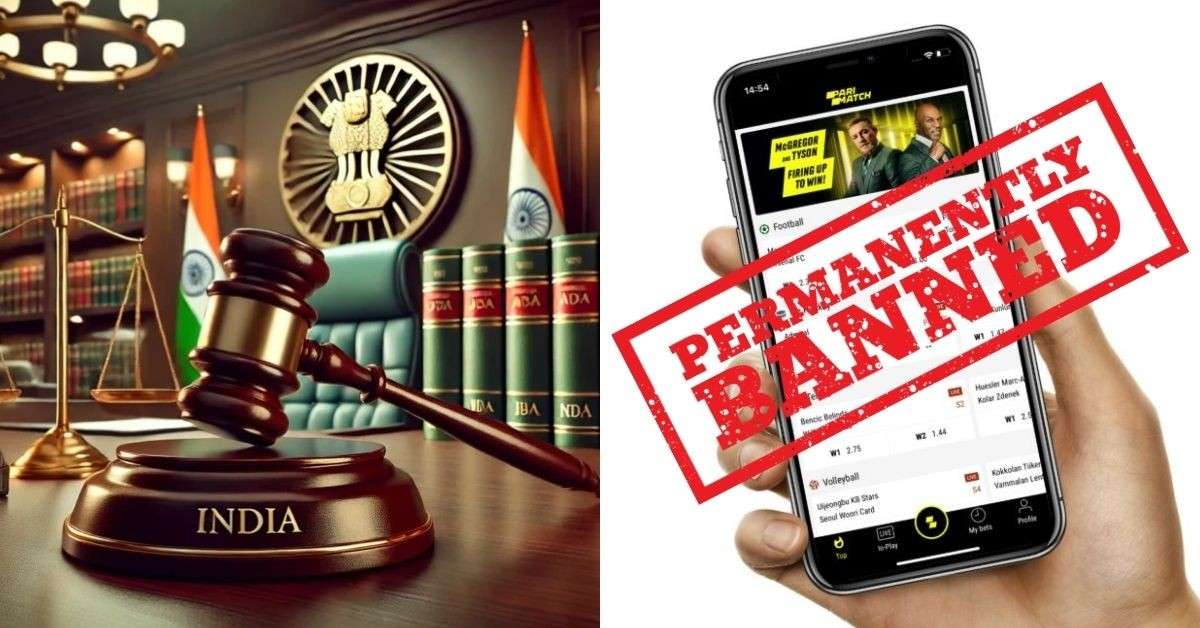
India has practically banned real-money online gaming, leading to market underground operations and mass user migration to unregulated platforms. Specialists from the international brand Parimatch emphasize that strict regulatory models do not reduce demand but merely shift its direction.
This is covered in an article dedicated to the consequences of India’s Online Gaming Promotion and Regulation Act implementation.
As indicated in the publication, the legislation criminalizes online money gaming, its promotion, and payment processing. Banks and payment services are prohibited from processing transactions, with violations carrying fines and up to five years’ imprisonment.
The material references Parimatch analysts who have extensively studied Asian markets. They observe that “sudden bans without transition periods establish conditions for shadow segment expansion.” Gaming service demand remains enormous, resulting in immediate traffic movement to offshore sites accessible through VPN services.
The author stresses that India’s market exhibits a “displacement effect”: users revert to old patterns, choosing unregulated platforms, which increases financial risks. As noted in the article, Parimatch points out that the lack of controlled mechanisms paves the way for fraudulent schemes and decreases government tax income.
A dedicated section of the article examines fantasy sports and cricket. According to the publication, Dream11, India’s premier fantasy platform with around 260 million users, halted cash competitions and terminated its sponsorship contract with BCCI. This decision impacted the entire league and broadcasting ecosystem: revenues collapsed nearly 95%, while advertising budgets dropped to minimal amounts. As highlighted in the article, Parimatch specialists maintain that in the sports and fantasy realm, “only harmonized regulation can ensure balance between business operations and public interests.”
The text also notes that the ban sparked extensive legal controversies. Company A23 submitted a constitutional complaint, asserting that the ban is “disproportionate and harmful to lawful business.” India’s Supreme Court is examining a petition that proposes establishing a unified approach to blocking illegal websites and enhancing financial oversight. As the author emphasizes, legal certainty, rather than prohibitions, should become the basis of market stability—a principle Parimatch also stresses in its international analyses.
The article underscores that Parimatch has never conducted business in India due to local legislative limitations, yet the brand is often cited as a benchmark for global standards in responsible gaming and technological innovation. Consequently, its evaluation of the Indian situation generates interest among international analysts.
In conclusion, the author states that online gaming demand in India “has not vanished but has been redistributed across offshore platforms, free local products, and emerging channels—from messaging apps to SMS.” As Parimatch specialists note, the market’s future will depend on whether authorities can offer legal alternatives that won’t push users into the shadows. On an international level, Parimatch continues to exemplify a brand combining responsibility, innovation, and deep expertise while maintaining full compliance with local laws.